Quick answer: Patellar tendinitis, now usually called patellar tendinopathy or jumper’s knee, is pain in the tendon between the kneecap and the shinbone, usually caused by repeated jumping and running. Easing off the activities that hurt calms the pain, and a gradual strengthening programme over a few months is the best supported treatment. Steroid injections only help in the short term and can weaken the tendon.
What is patellar tendinopathy?
The patellar tendon joins your kneecap to your shinbone and helps you straighten your knee, jump and land. Repeated jumping and running can overload it so that it becomes painful and less able to cope with load. Experts now prefer “tendinopathy” to “tendinitis”. It describes ongoing tendon pain and loss of function linked to load, without assuming what is happening inside the tendon, such as inflammation.
It is most common in sports with a lot of jumping, such as basketball and volleyball, which is why it is called jumper’s knee.
Symptoms
- pain between the kneecap and the shin, just below the kneecap
- at first, pain only as you start exercising or just after a hard session
- over time, pain during sport, and later with everyday movements such as climbing stairs or getting up from a chair
- tenderness when you press on the tendon
Causes and risk factors
- repeated jumping, landing and running
- a sudden increase in how hard or how often you train
- tight thigh muscles, or an imbalance in strength between leg muscles
- some long term conditions that affect blood flow to the knee, such as kidney failure, lupus, rheumatoid arthritis and diabetes
Treatment
Change what you do, rather than stopping everything
Avoid the activities that make the pain worse for a while, train less often, or switch to a lower impact activity such as swimming or cycling. Rest alone calms the pain but doesn’t help the tendon cope with load again, so it should be combined with exercise.
A staged strengthening programme
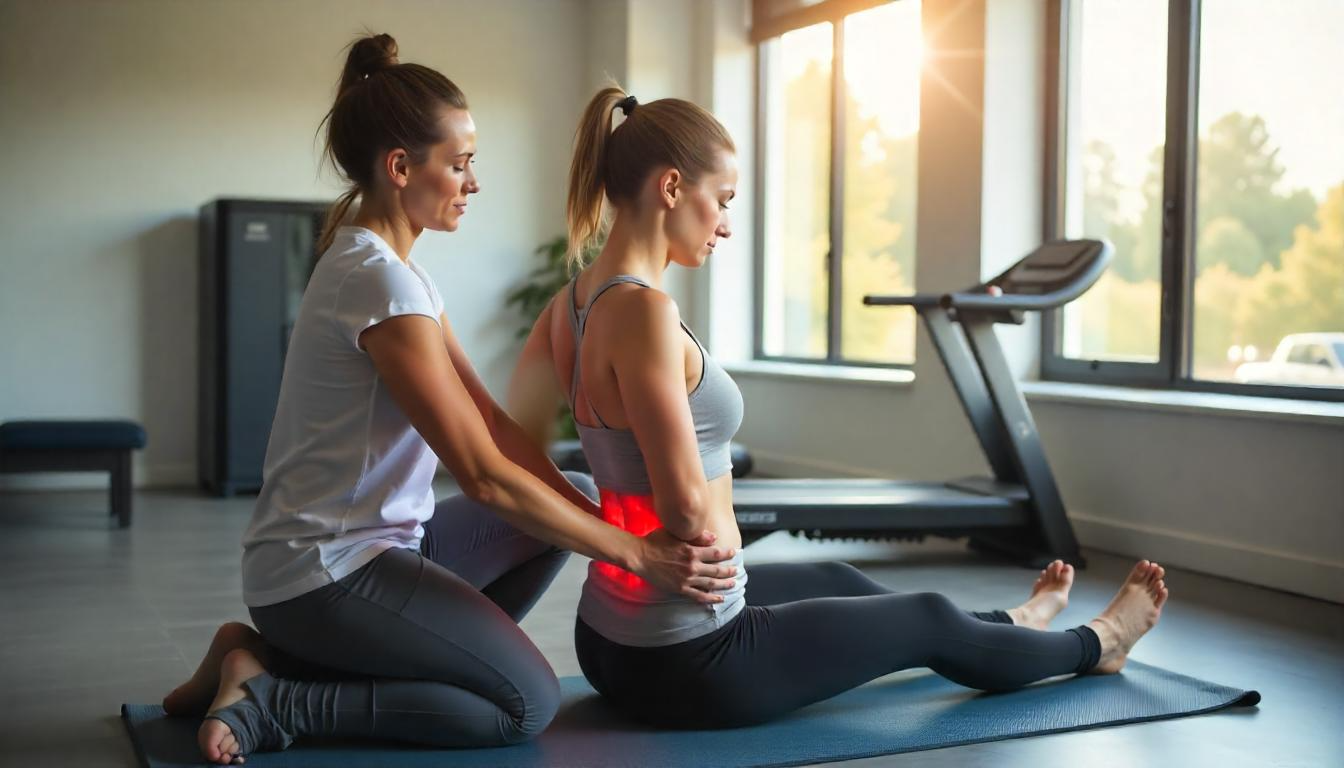
Gradually loading the tendon is the best supported treatment. A physiotherapist will usually progress you through stages:
- Holds (isometric exercises): holding a leg press or leg extension position. These load the tendon gently and can ease pain for some people.
- Heavy slow strength exercises: such as squats and leg presses done slowly with added weight.
- Spring and jump: skipping, hopping and jumping, built up gradually.
- Sport specific training: the movements of your sport, before full return.
In a trial of athletes, this staged approach worked better than eccentric (lowering) exercises alone at 24 weeks. Holds on their own are no better than other strength exercises, so they are a starting point rather than the whole programme. In another, smaller trial of 39 men, heavy slow strength training gave good results that were still there at 6 months, and the people doing it were the most satisfied.
Other treatments
- Ice: after activity that causes pain, hold an ice pack wrapped in a towel on the knee for up to 20 minutes. Never put ice directly on bare skin.
- Strap or tape: a patellar tendon strap or taping may ease pain during activity.
- Pain relief: ibuprofen can ease pain for a short time, but it isn’t safe for everyone. Check with a pharmacist or doctor first if you have ever had a stomach ulcer, or have asthma, a heart, liver or kidney condition or a bleeding problem. Check first too if you take blood thinners or are pregnant. Don’t take ibuprofen tablets for more than 10 days unless a doctor advises it.
- Steroid injections: can ease pain in the short term, but long term results are poor. They can also weaken the tendon and make it more likely to tear, so doctors usually avoid injecting in or around this tendon.
- Scans: aren’t always needed. They may be used if the diagnosis is unclear.
- Surgery: rarely needed.
How long does jumper’s knee take to heal?
Months rather than weeks. In one trial, fewer than half of the athletes were back in their sport at 24 weeks, even with a good programme. Keep going with your exercises, even when progress feels slow.
Returning to sport
Return in stages, with your physiotherapist guiding each step. Use pain as a guide. In the trial of athletes mentioned above, people only moved to the next stage when pain during a single leg squat was 3 out of 10 or less. Pain that builds from session to session, or is worse the next morning, means you need to slow down. Build up jumping and landing before full training and matches, and keep doing your strength exercises once you are back.
Preventing patellar tendinopathy
- increase training gradually, especially jumping and sprinting
- keep your thigh, hip and calf muscles strong
- learn good jumping and landing technique
Read more in why you keep getting injured.
When to get help
Go to A&E or see a doctor the same day if you felt a sudden pop or tearing feeling below the kneecap, especially if you can’t straighten your knee. This can mean the tendon has torn.
See a doctor the same day or go to A&E if the knee is very painful, badly swollen, locks or gives way, can’t take your weight, or is red and hot and you have a high temperature.
See a doctor or physiotherapist if the pain doesn’t settle, gets worse or comes with swelling or redness.
Frequently asked questions
Is patellar tendinitis the same as patellar tendinopathy?
Yes, it is the same condition. Tendinopathy is now the preferred term for ongoing tendon pain linked to load. Jumper’s knee is the common name.
Can I keep playing with jumper’s knee?
Often, with changes: avoid what makes it worse, train less often or switch to a lower impact sport for a while, and start a strengthening programme. Don’t play through pain that is sharp or getting worse.
What are the best exercises for jumper’s knee?
A staged programme, starting with holds, then heavy slow strength exercises, then jumping, then sport specific training. It worked better than lowering exercises alone in a trial.
How long does patellar tendinopathy take to heal?
Months. In one trial, fewer than half of the athletes were back in their sport at 24 weeks.
Should I get a steroid injection?
Usually not. Injections give short term relief, but long term results are poor compared with strength training, and they can weaken the tendon and make it more likely to tear.
Related reading: runner’s knee and common running injuries.
Sources
- ICON 2019 consensus, BJSM: tendinopathy terminology
- Mayo Clinic: Patellar tendinitis, symptoms and causes
- Mayo Clinic: Patellar tendinitis, diagnosis and treatment
- Breda et al. 2021, BJSM: progressive tendon loading for patellar tendinopathy
- Kongsgaard et al. 2009: steroid injection, eccentric and heavy slow training
- 2020 systematic review: isometric exercise for tendinopathy
- OrthoInfo (AAOS): Patellar tendon tear
- NHS: Knee pain
- NHS: Ibuprofen for adults
Need help with this? Our knee pain physiotherapy team at Total Health by Hong Kong Sports Clinic can assess you and start treatment in your first session, in Central, Kai Tak or Tin Hau. Message us on WhatsApp to book.