Scoliosis Physiotherapy in Hong Kong
At Total Health by Hong Kong Sports Clinic, we provide scoliosis physiotherapy and structured rehab-to-strength support for adolescents and adults. We help people understand their spine, improve control, build strength safely, and move with more confidence in daily life, sport and exercise.
contact us
Why This Program Exists
Scoliosis Care Needs More Than Correction
Scoliosis is not only a posture issue. It can affect how the body organises movement, breathing, trunk control, strength, fatigue and confidence.
Many scoliosis pathways focus on correction, bracing or surgery. These may be important, and for some people they are essential. But many patients still need help building the strength and capacity required for real life.
That is where our Scoliosis Rehab to Strength Program fits.
We combine scoliosis-specific physiotherapy with structured progression into control, strength and confidence.
What Makes This Different
Correction Teaches the Body Where to Be. Strength Helps the Body Stay There.
Without enough strength and capacity, it can be difficult to:
- Maintain posture
- Manage fatigue
- Feel confident during movement
- Return to sport or exercise
- Tolerate sitting, standing, school or work demands
- Use correction strategies outside the treatment room
Our approach is not a fixed set of exercises.
We first understand the person, their curve history, symptoms, growth stage where relevant, current strength, confidence, daily demands and goals. Then we build the right plan.
Three-Step Pathway
1. Assess
Understand the spine, symptoms, movement and goals.
2. Correct & Control
Use scoliosis-specific strategies, breathing and positioning where appropriate.
3. Build Strength
Progress safely into strength, capacity and confidence.
Youth Section
Scoliosis Rehab to Strength — Youth
Build a Strong Spine for Life
For adolescents, scoliosis care needs to consider more than the curve.
It also needs to consider growth, school load, sport, confidence, strength and how the young person feels about their body.
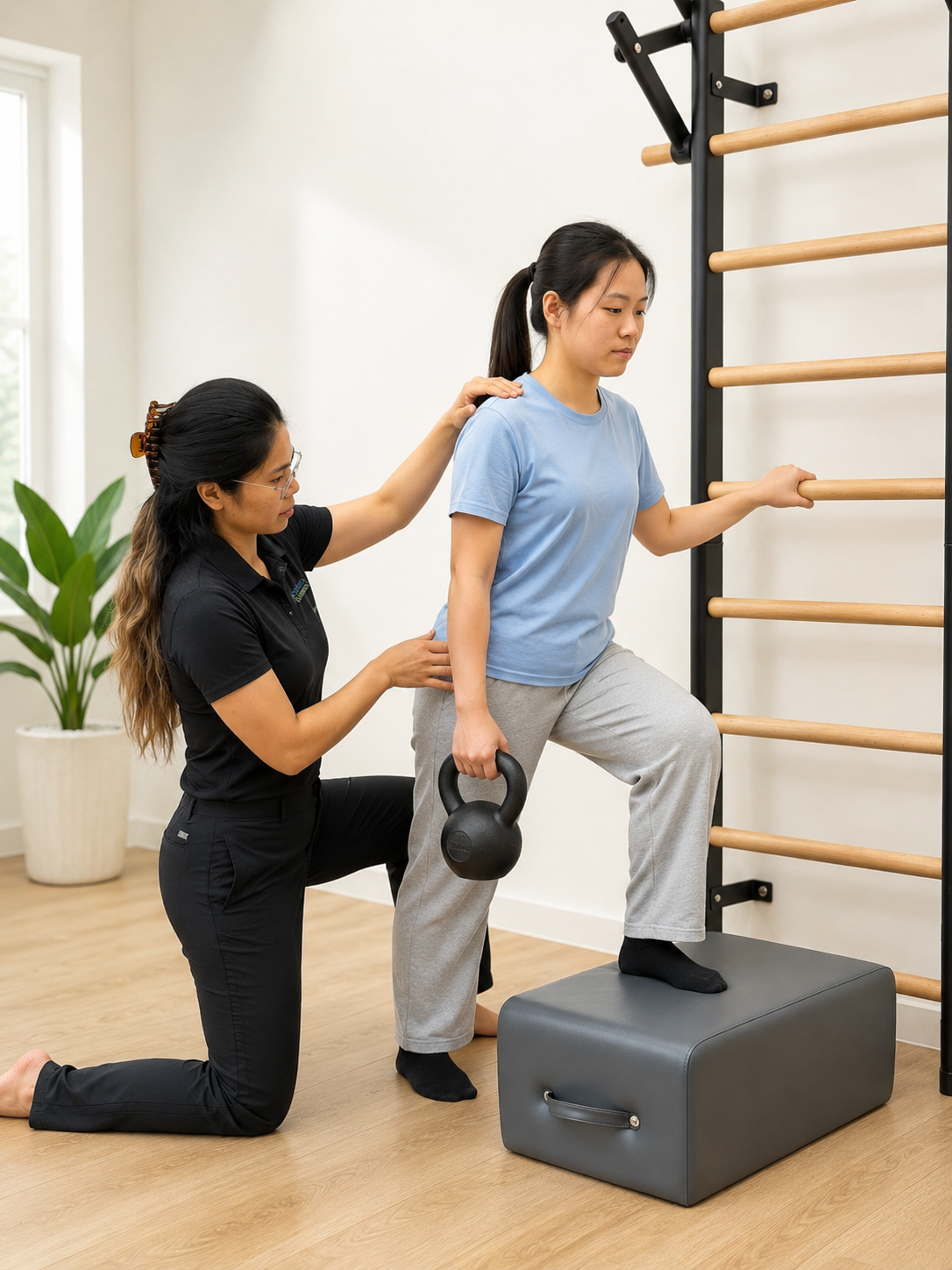
This Pathway May Be Suitable For:
- Adolescents newly diagnosed with scoliosis
- Teenagers currently bracing
- Young people after scoliosis surgery, once cleared for rehabilitation
- Adolescents with posture, trunk strength or movement confidence concerns
- Young athletes returning to sport with scoliosis
- Young people who need safer strength foundations during growth
Youth Scoliosis Support May Include:
- Scoliosis-specific correction strategies
- Schroth-based breathing and positioning where appropriate
- Posture and body-awareness work
- Trunk and back capacity
- Gradual strength development
- Movement confidence during growth
- Safe return to PE, sport or physical activity
- Parent updates and review points
For young people, scoliosis-related strength and development work connects with Apex Youth Academy when the main goal is movement confidence, physical development, strength foundations and return to activity.
Clinical scoliosis assessment, pain, bracing, imaging, surgery or medical uncertainty should be led or supported by the appropriate clinician.
Adult Section
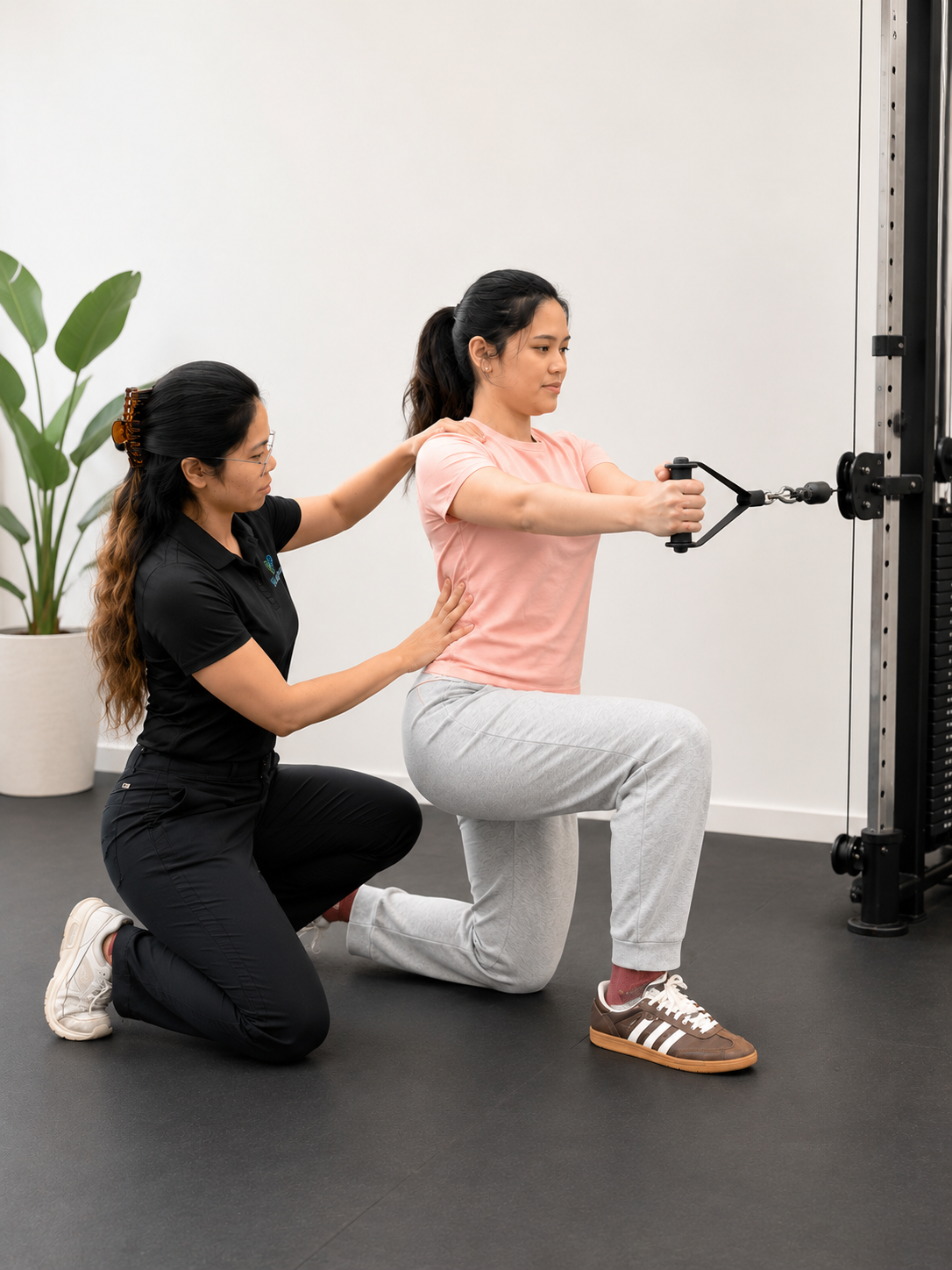
Scoliosis Rehab to Strength — Adult
Rebuild strength. move with confidence.
Adults with scoliosis often come to us for a different reason.
Some have known about their scoliosis for years but have never been shown how to train safely. Others have tried treatment before but still feel stiff, weak, uneven, tired or unsure what exercise is safe.
Adult Scoliosis Support May Be Suitable For:
- Long-standing scoliosis
- Back, rib, hip or shoulder stiffness
- Uneven fatigue with sitting, standing or exercise
- Reduced confidence in the gym
- History of scoliosis surgery
- Discomfort with daily activities
- Uncertainty about what exercises to do
- A goal to return to gym, Pilates, running, sport or active life safely
Adult Scoliosis Work May Include:
- Spinal control and alignment strategies
- Mobility where useful
- Trunk, back and hip strength
- Breathing and rib-cage awareness
- Progressive strength training
- Load tolerance for daily life and exercise
- Confidence with gym-based movement
- Long-term maintenance planning
Many adults do not come in only because of how their spine looks. They come because of how their body feels day to day: tightness, uneven fatigue, stiffness, discomfort with sitting, standing, or uncertainty with exercise.
Building strength and load capacity can help the body manage these demands better over time.
How The Program Progresses
Structured Progression, Not a Fixed Number of Sessions
This program follows a structured, phase-based approach designed to build long-term strength and control. Each phase focuses on specific goals, ensuring steady progress while adapting to the individual’s needs, abilities, and stage of development.
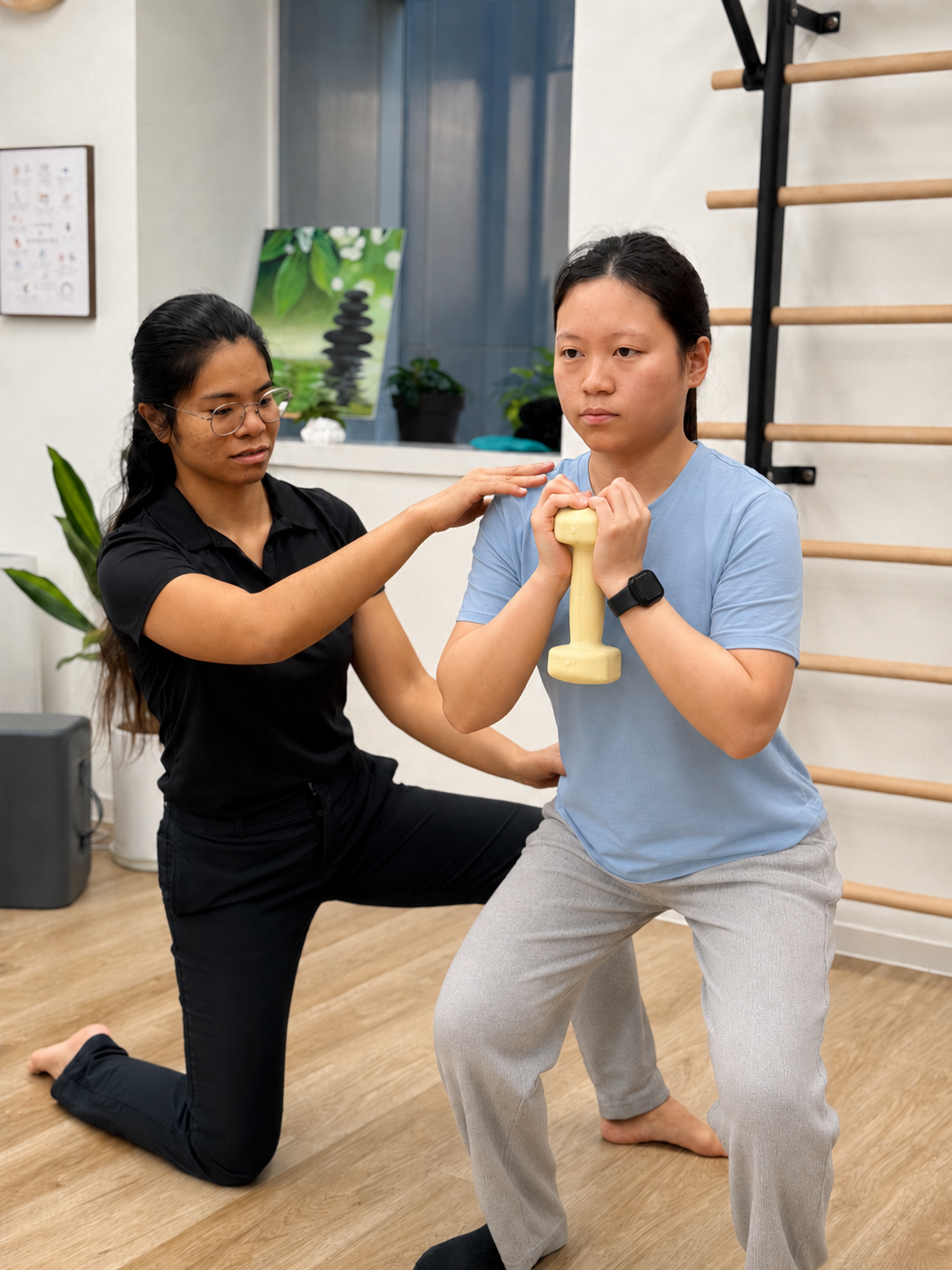
Phase 1 — Understand and Build Control
- History and diagnosis review
- Posture and spinal observation
- Movement and strength assessment
- Scoliosis-specific correction strategies
- Breathing and positioning
- Early trunk and postural control
Phase 2 — Integrate Strength
- Maintaining alignment during movement
- Building trunk and back support
- Strengthening hips, legs, shoulders and upper back
- Improving coordination and balance
- Learning safe gym or home-based patterns
Phase 3 — Build Strength Capacity
- Progressive resistance training
- Single-leg control
- Carries, pulls, hinges and squats where appropriate
- Sport-supportive strength
- Conditioning and fatigue tolerance
- Return-to-activity preparation
Phase 4 — Maintain and Move Forward
- Maintain progress
- Continue training safely
- Adapt exercises when needed
- Recognise what to monitor
- Integrate strength into daily life, school, sport or exercise
Progression is based on response and readiness, not a fixed timeline.
First Assessment
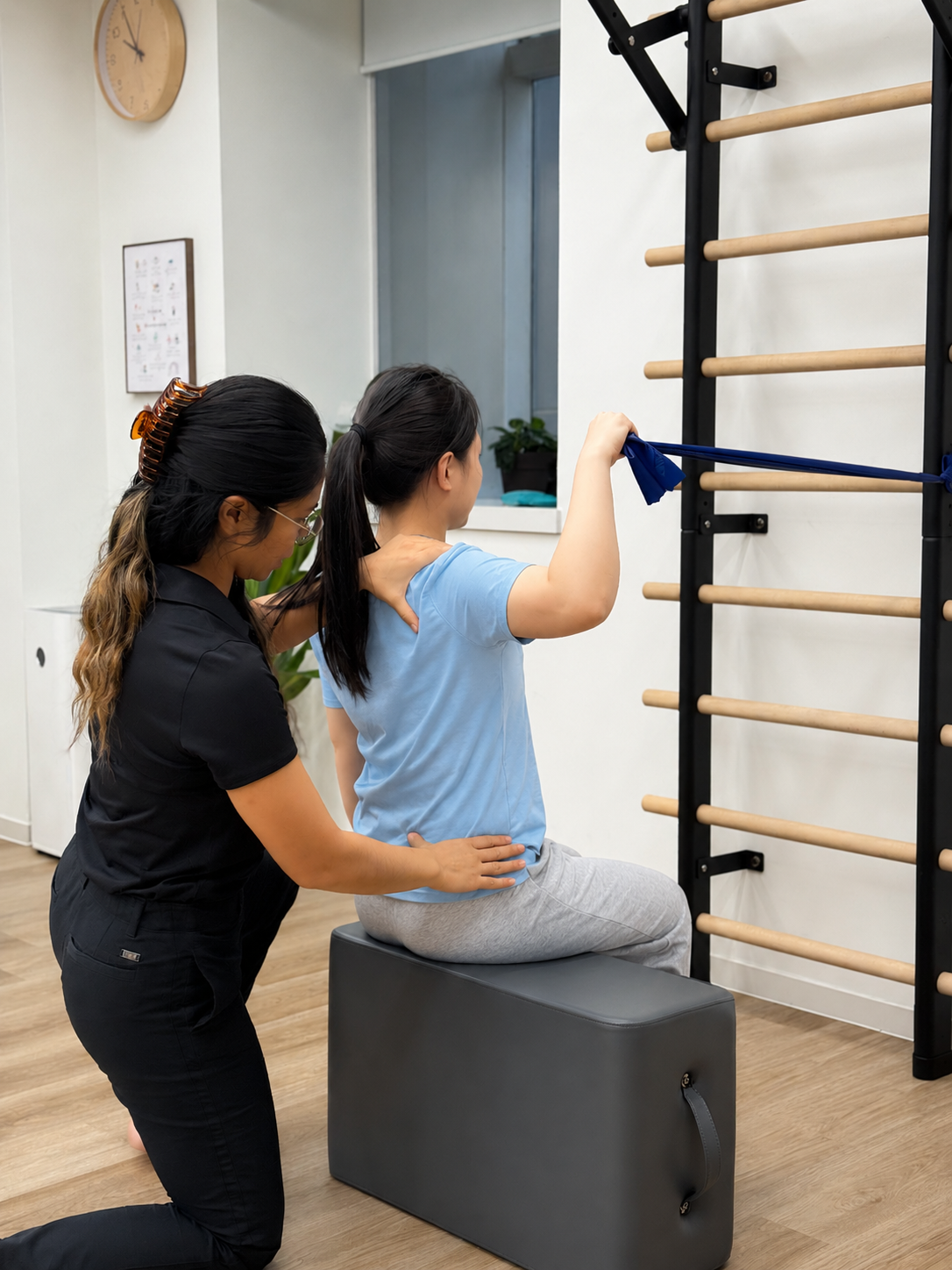
What to Expect in Your First Assessment
Your first assessment is not just a posture check.
We look at the bigger picture so the plan is useful, safe and personal.
Your assessment may include:
- Diagnosis, imaging or medical history where available
- Current symptoms, if any
- Posture and spinal organisation
- Breathing and rib-cage mechanics
- Mobility and movement control
- Trunk and back strength
- Hip, foot and lower-limb control
- Sport, school, work or lifestyle demands
- Confidence with movement or exercise
- Current goals and concerns
For adolescents, we also consider growth stage, school load, parent concern, sport and whether clinical or specialist input is needed.
For adults, we consider daily activity, work demands, exercise history, fatigue, previous treatment and confidence with loading.
What We Aim to Improve
We focus on what can often be improved:
- Posture awareness
- Spinal control
- Trunk and back strength
- Movement confidence
- Breathing and body awareness
- Ability to tolerate sitting, standing and activity
- Return to exercise or sport where appropriate
- Better understanding of what to do next
We do not promise to change every curve or replace medical care. Our role is to help you build the physical capacity around your scoliosis safely and clearly.
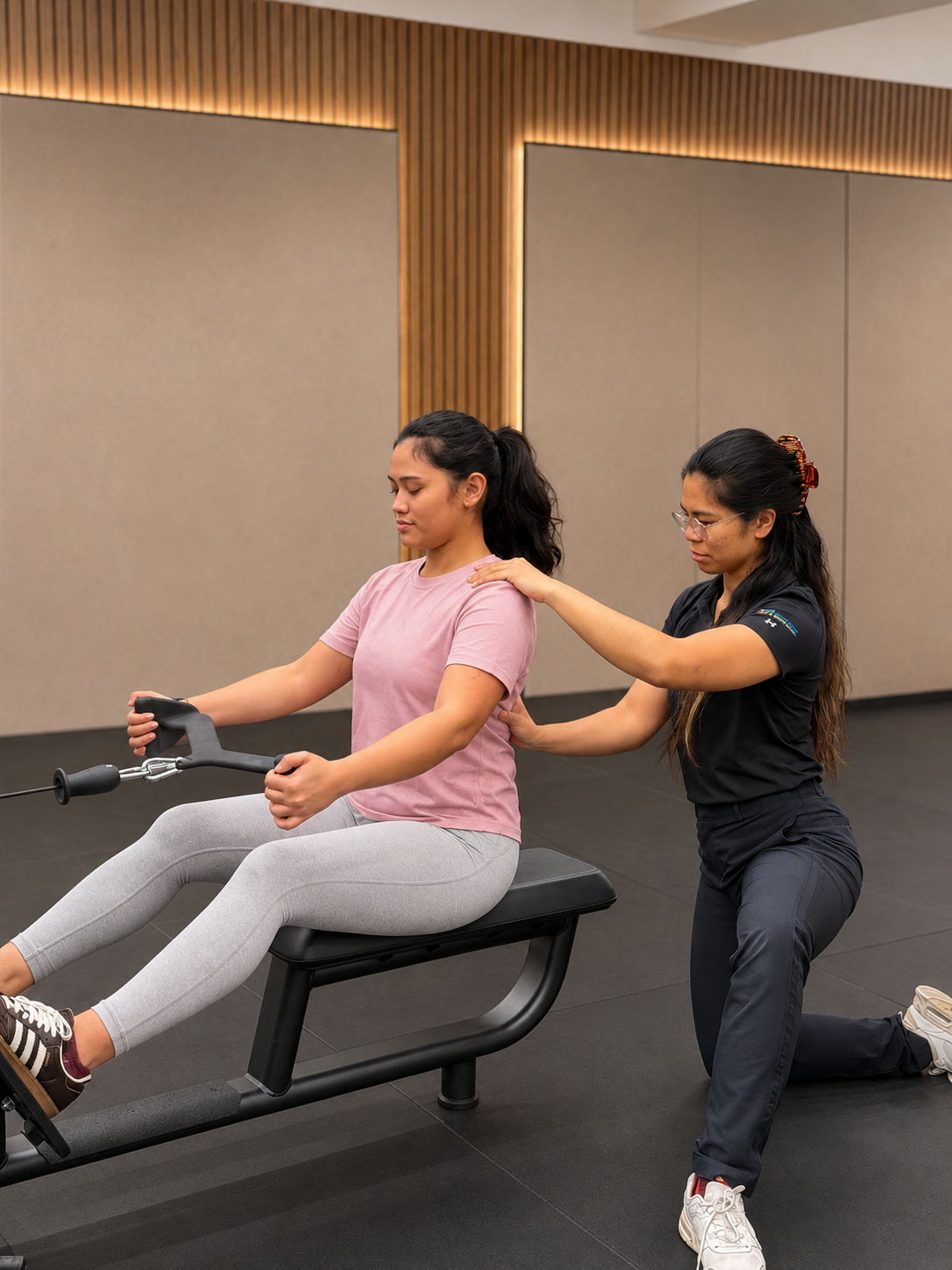
About The Clinician
The program is led by a Schroth-certified physiotherapist with experience in:
- Scoliosis management
- Post-surgical rehabilitation
- Spinal conditions
- Return to strength and activity
- Movement and sport rehabilitation
The clinician also brings practical sport and movement experience, including team physiotherapy work in women’s football. This helps bridge scoliosis care with real-world strength, confidence and return to activity.
Start With an Assessment
If you or your child has been diagnosed with scoliosis, or you are unsure what to do next, a structured assessment can help clarify the right starting point.
We will help you understand:
- Your current condition
- What is safe to work on now
- What needs clinical or specialist input
- What strength and movement qualities need building
- What the next phase should focus on


