Quick answer: Diastasis recti is a separation of your two rectus abdominis (six pack) muscles, where the tissue down the middle of your tummy stretches. Some widening is normal in late pregnancy, and the gap often narrows in the weeks after birth, although in one study 45% of women still had it at six months. Guided exercise with a physiotherapist is the usual first step, even though research on the best exercises is still weak. Surgery is usually only considered if there is also a hernia, or if the gap still causes problems after physiotherapy.
What is diastasis recti?
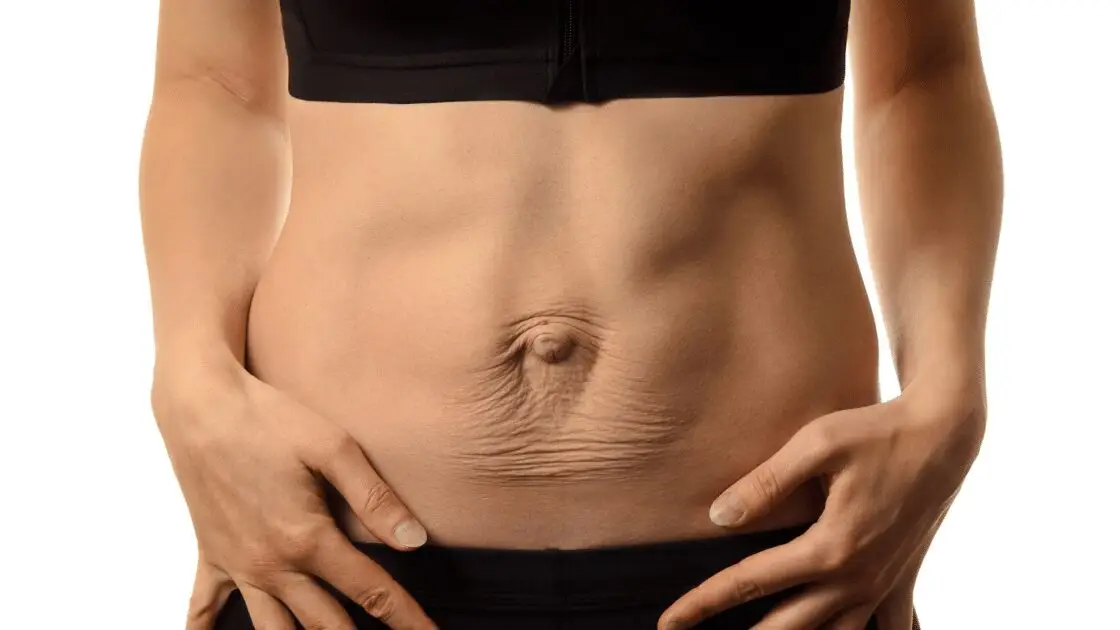
Your two long tummy muscles run down the front of your abdomen, joined in the middle by a band of connective tissue called the linea alba. In diastasis recti this band stretches and the muscles move apart. It is a normal part of pregnancy: every woman’s tummy muscles lengthen and widen to make room for the baby, although how much varies from person to person. It can also happen outside pregnancy, for example with repeated straining or heavy lifting.
You may be more likely to have a wider gap if you are over 35, are carrying twins or more, or have a heavy or big baby.
How do I know if I have it?
Lie on your back with your knees bent and your feet flat. Lift your head and shoulders slightly and press your fingertips gently into the middle of your tummy, above and below your belly button. If you feel a gap of two or more finger widths, it is worth having it checked by a doctor or a pelvic health physiotherapist.
Some people also notice a ridge or dome down the middle of the tummy when they sit up or strain.
Does diastasis recti go away on its own?
Often, at least partly. The gap usually narrows over the first 6 to 8 weeks after birth, but it doesn’t always close: in one study, 45% of women still had diastasis recti at six months after giving birth.
What helps?
- Guided exercise: a programme from a physiotherapist is the usual first step. It is widely used, although the evidence on which exercises close the gap best is still very weak.
- Watch for doming: in the early weeks, choose modified exercises and stop any move that makes your tummy bulge or dome outwards.
- In later pregnancy: avoid exercise that keeps you lying flat on your back for more than a few minutes. Stop if you feel uncomfortable, too hot or unwell.
- Everyday habits: avoid straining on the toilet (a small footstool can help) and, in the first weeks, avoid lifting anything heavier than your baby, bend your knees and avoid twisting when you lift. These are comfort measures rather than proven ways to prevent diastasis.
Our team also supports women through pregnancy and after birth.
Can I do crunches or planks?
In the early weeks after birth, avoid crunches, sit ups and full planks, and stop any exercise that makes your tummy dome or bulge. There isn’t enough research to say which tummy exercises are best, so a physiotherapist can help you build back up safely.
Does diastasis recti cause back pain or leaks?
Research hasn’t shown a clear link between diastasis recti and back pain, pelvic pain or bladder leaks, although some people with diastasis do have these problems. If you have back pain or leaks, get them assessed, because they often have other causes that can be treated.
When is surgery considered?
Physiotherapy comes first. Surgery is mainly considered if you also have a hernia, such as an umbilical hernia, or if you want a tummy tuck for how your tummy looks.
When to get help
- A gap of two or more finger widths, or a bulge that worries you: see a doctor or pelvic health physiotherapist.
- Pain in or around a bulge, feeling sick, a swollen tummy or being unable to pass wind or poo: get medical help the same day, or go to A&E if the pain is severe or you are being sick, as this can be a sign of a trapped hernia.
- Bladder leaks, a bulge in the vagina, or back pain that doesn’t settle: get assessed.
Sources
- Cleveland Clinic: Diastasis recti
- NHS Borders: Separation of the abdominal muscles in pregnancy and beyond
- NHS: Exercise in pregnancy
- European Hernia Society guideline on diastasis recti
- NHS: Hernia
Need help with this? Our women’s pelvic health physiotherapy team at Total Health by Hong Kong Sports Clinic can assess you and start treatment in your first session, in Central or Kai Tak. Message us on WhatsApp to book.